RFK Jr. appointed Interagency Autism Coordinating Committee (IACC) - Riddled with Financial Conflicts of Interest
What is the IACC?
An HHS Committee to Support the Autistic Community.
IACC Overview: The Interagency Autism Coordinating Committee (IACC) is a Federal advisory committee (5 U.S.C. §§ 1001-1014) that coordinates Department of Health and Human Services (HHS) efforts on autism, influencing $2 billion in annual federal spending through its Strategic Plan recommendations to Congress and NIH. Though recommendations are nonbinding, the committee has historically shaped research priorities. The Office of the Director of the National Institute of Mental Health (NIMH) manages and supports the IACC.
By including Federal and public members, the IACC helps ensure that a wide range of ideas and perspectives are represented and discussed in a public forum. According to its Charter, the IACC’s mission is to:
Provide advice and recommendations to the HHS Secretary on Federal activities related to autism.
Facilitate information exchange and coordination of autism activities among member agencies.
Increase public understanding of the member agencies' activities, programs, policies, and research by providing a public forum for discussions related to autism research, services, and policy.
For a more in depth deep dive check out our substack on the topic.
Concerning Make Up of IACC Members:
Secretary Kennedy replaced all prior IACC public members with 21 new members. The new IACC represents a homogeneous group whose members are associated with a small number of organizations that are advancing non-scientific and potentially harmful treatments for autism, which violates FACA standards of balanced viewpoints (5 U.S.C. App. § 5(b)(2)). Furthermore, the current IACC has reduced the representation of autistic self-advocates from 9 to 3.
The current IACC composition presents a convergence of risk factors:
Prior legal challenges involving unsafe or unsupported treatments: Courts have rejected expert testimony from IACC-affiliated individuals and found a lack of scientific acceptance for certain autism causation claims; Allegations have been made against the use of experimental treatments in children and the use of therapies lacking evidence.
Financial and advocacy conflicts: Multiple members are linked through autism treatment advocacy organizations and clinician networks promoting biomedical interventions
Coordinated policy influence capacity: Members with lobbying backgrounds could shift policy and federal funding away from evidence-based practices towards their own agenda.
The current composition of the IACC reflects a highly interconnected network of clinicians, advocacy leaders, researchers, and entrepreneurs whose professional activities frequently converge around non-mainstream biomedical, environmental, and alternative communication frameworks for autism. Rather than representing a balanced cross-section of evidence-based expertise, the committee is heavily populated by individuals embedded in overlapping organizations that promote contested hypotheses about autism causation and treatment. This includes frameworks centered on immune dysfunction, mitochondrial abnormalities, environmental exposures, and vaccine injury, many of which remain scientifically debated or lack sufficient large-scale validation. The result is a structural concentration of influence that raises concerns about the integrity of federal autism policy guidance.
Concerning Oversight with new NAC Advisor:
Diana Diaz-Harrison is the founder and CEO of the Arizona Autism Charter Schools network, a conglomerate of six schools focused on educating autistic children, and launched the National Accelerator of Autism Charter Schools to, a national training and technical assistance initiative designed to support the development of autism-focused charter schools in major metropolitan areas across the United States.
NAC Advisor Controversial practices
According to The74 data collected through an initiative of Secretary Betsy DeVos found that the charter network founded by Diaz-Harrison had two schools serving 283 students, 116 of whom were restrained and 57 secluded. Ninety-nine of the schools’ 146 K-5 students, or 68%, had been restrained, amounting to 50% higher than the national average. https://www.the74million.org/article/trump-officials-autism- schools-secluded-and-restrained-students-at-high-rates/ The Arizona Autism Charter Schools heavily rely on use of Applied Behavioral Analysis, an intervention introduced in the late 80ies whose efficacy across the spectrum has met controversy and has been reported as potentially abusive by former patients. America’s Most Popular Autism Therapy May Not Work — and May Seriously Harm Patients’ Mental Health – The 74.
2026 New Committee Members: Politicized Appointment, Not Meeting FACA Requirements, and, Conflicts of Interest
Concerning Oversight with new NAC Advisor:
Diana Diaz-Harrison is the founder and CEO of the Arizona Autism Charter Schools network, a conglomerate of six schools focused on educating autistic children, and launched the National Accelerator of Autism Charter Schools to, a national training and technical assistance initiative designed to support the development of autism-focused charter schools in major metropolitan areas across the United States.
NAC Advisor Controversial practices
According to The74 data collected through an initiative of Secretary Betsy DeVos found that the charter network founded by Diaz-Harrison had two schools serving 283 students, 116 of whom were restrained and 57 secluded. Ninety-nine of the schools’ 146 K-5 students, or 68%, had been restrained, amounting to 50% higher than the national average. The Arizona Autism Charter Schools heavily rely on use of Applied Behavioral Analysis, an intervention introduced in the late 80ies whose efficacy across the spectrum has met controversy and has been reported as potentially abusive by former patients. America’s Most Popular Autism Therapy May Not Work — and May Seriously Harm Patients’ Mental Health – The 74.
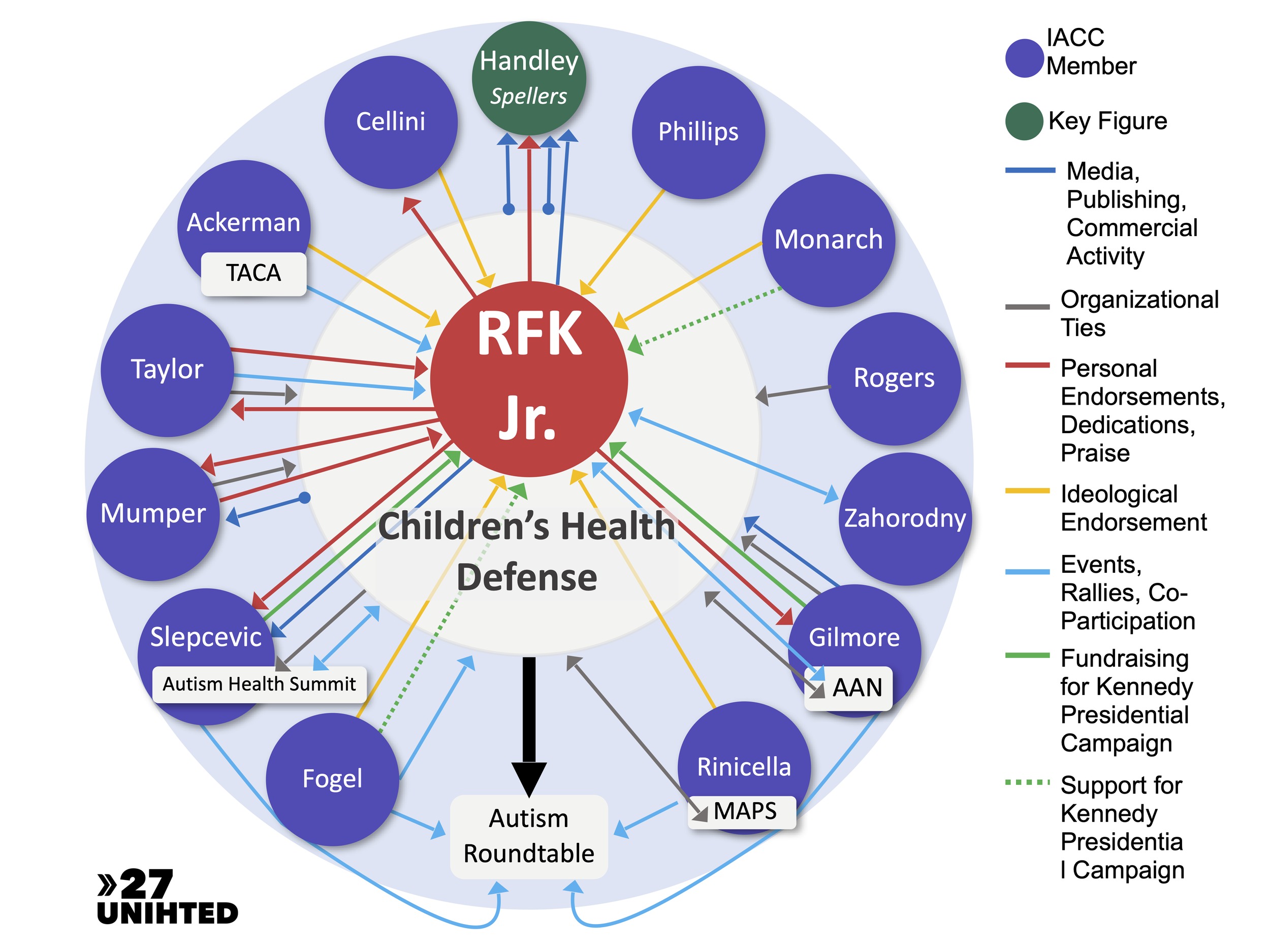
Image 1: on the left shows some of the new members of the IACC, and how they affiliate with RFK Jr., his organization the Children’s Health Defense, and their affiliation to other concerning groups. TACA stands for: The Autism Community In Action ANN stands for: Autism Action Network. MAPS stands for: Medical Academy of Pediatrics
The New Committee Supports Concerning Science
The new membership reflects a highly interconnected network of individuals and organizations whose work consistently aligns around non-mainstream biomedical, environmental, and alternative communication frameworks for autism. These include theories that remain scientifically debated and not established as consensus foundations for clinical care. Former IACC chair Joshua Gordon stated,
"Not a single scientist that I am familiar with as being an expert in autism research is on that list."
Politicized Appointment Processes:
In January 2026 RFK Jr. Appointed all new members to the IACC. These positions were listed as vacent in September 2025, but Three new IACC members announced their appointments almost a month before the Federal Register nomination deadline and just days after the deadline was extended. Of those announcing their nominations prior to the January second deadline include appointments include, Honey Rinicella and John Gilmore, Jennifer Philips, and Ginger Taylor. “standard orientation meeting” for members reportedly occurred the previous week, before the appointments were made public, according to HHS spokesperson Andrew Nixon. The IACC is an official government advisory committee charged with developing a strategic plan and proposed budgetary requirements for autism research under section 409C(a)(1) of the PHS Act, and is subject to FACA. The preceding events suggest FACA violations may have occurred by failing to notice an orientation meeting in the Federal Register that was open to the public and operated without DFO oversight.
Committee Make Up Legal Violations:
Secretary Kennedy replaced all prior IACC public members with 21 new members. The new IACC represents a homogeneous group whose members are associated with a small number of organizations that are advancing non-scientific and potentially harmful treatments for autism, which violates FACA standards of balanced viewpoints (5 U.S.C. App. § 5(b)(2)). Furthermore, the current IACC has reduced the representation of autistic self-advocates from 9 to 3.
Additionally In running the IACC, HHS and NIH have not adhered to the standards of transparency, accountability, and representation laid out in the Federal Advisory Committee Act. For example, despite statutory requirements that the IACC meet 2 times per year, the IACC did not convene from January 14, 2025 until April 28th 2026.
Not Following Committees’ Legal requirements:
In running the IACC, HHS and NIH have not adhered to the standards of transparency, accountability, and representation laid out in the Federal Advisory Committee Act. For example, despite statutory requirements that the IACC meet 2 times per year, the IACC did not convene from January 14, 2025 until April 28th 2026.
Concerning Organizational Involvement:
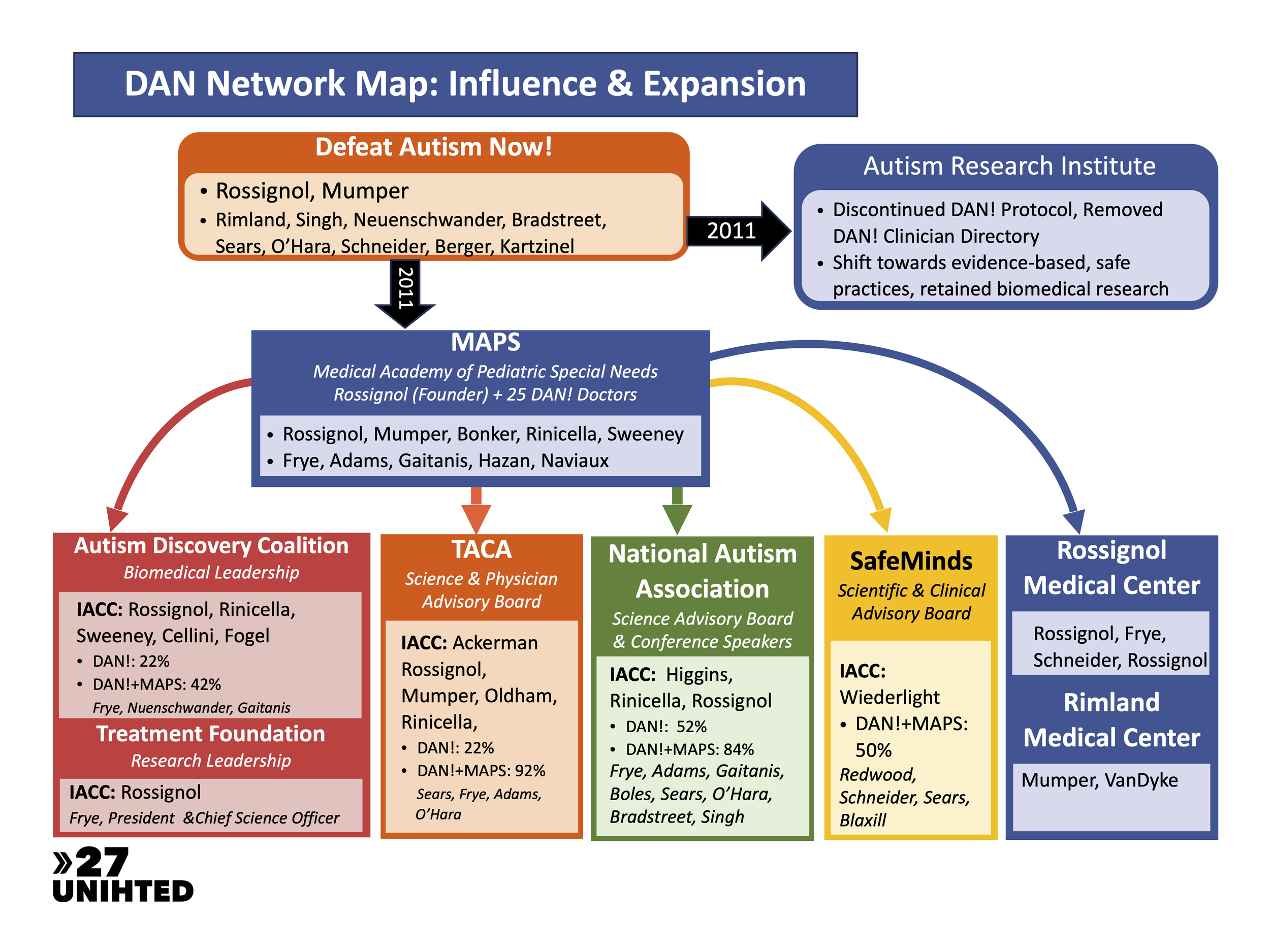
Image 2 showcases the Defeat Autism Now! Organizational framework and it’s influence on other organizations associated with new IACC members
Many of the same individuals serve simultaneously as clinicians delivering specialized treatments, leaders of advocacy organizations, contributors to research aligned with those treatments, and participants in federal policy advisory roles. A relatively small group of repeat actors sits at multiple points along that pipeline. At the same time, advocacy organizations direct families toward these same providers and treatment pathways (often at high personal cost), while conferences and platforms operate as marketplaces where services, products, and ideas are promoted together.
The Autistic Community is Not Safe
he new membership reflects a highly interconnected network of individuals and organizations whose work consistently aligns around non-mainstream biomedical, environmental, and alternative communication frameworks for autism. These include theories that remain scientifically debated and not established as consensus foundations for clinical care. Former IACC chair Joshua Gordon stated, "Not a single scientist that I am familiar with as being an expert in autism research is on that list."
What makes this situation concerning is not any single viewpoint, but the convergence of roles.
This raises several key risks for federal agencies:
Research agenda distortion, where funding and priorities may be steered toward non-consensus hypotheses.
Premature clinical adoption, where interventions are promoted and used before sufficient evidence of safety and effectiveness.
Commercialization of care pathways where financial incentives are embedded across training, diagnostics, and treatment delivery.
Public trust and patient harm, particularly for families navigating complex, costly, and sometimes unproven interventions.
Innovation in autism research is essential, and exploring biological complexity is important, but federal policy must be grounded in rigorous evidence, transparency, and independence from financial conflicts. When the same actors are positioned to influence policy, shape research, generate demand, and benefit from the outcome, the risk is regulatory capture.
IACC Member Names: Sylvia Fogel, M.D., Daniel Rossignol, M.D., Elizabeth Mumper, M.D., John Rodakis, Elena Monarch, Ph.D., Laura Cellini, Jennifer Philips, John Gilmore, M.P.P., Caden Larson, Elizabeth Bonker, Lisa Wiederlight, M.P.P., Toby Rogers, Ph.D., M.P.P., Walter Zahorodny, Ph.D., Bill Oldham, Honey Rinicella, Krystal Higgins, Ginger Taylor, M.S., Daniel Keely, Lisa Ackerman, Tracy Slepcevic, Katie Sweeney