
This interactive dashboard to showcases the personal impact these terminations had on respondents. Below this is a report with static images of the same information for readability, to publish, and for printability. There may be slight variations between data shown on tableau and in static images.
Government Transparency

Agency Trust
Respondents were asked questions about their termination experiences including questions about transparency from leadership, trust in leadership, how adequately they felt their agency shared information, if they were missing documentation, and what the experience was like for reinstated employees.
Trust in Leadership
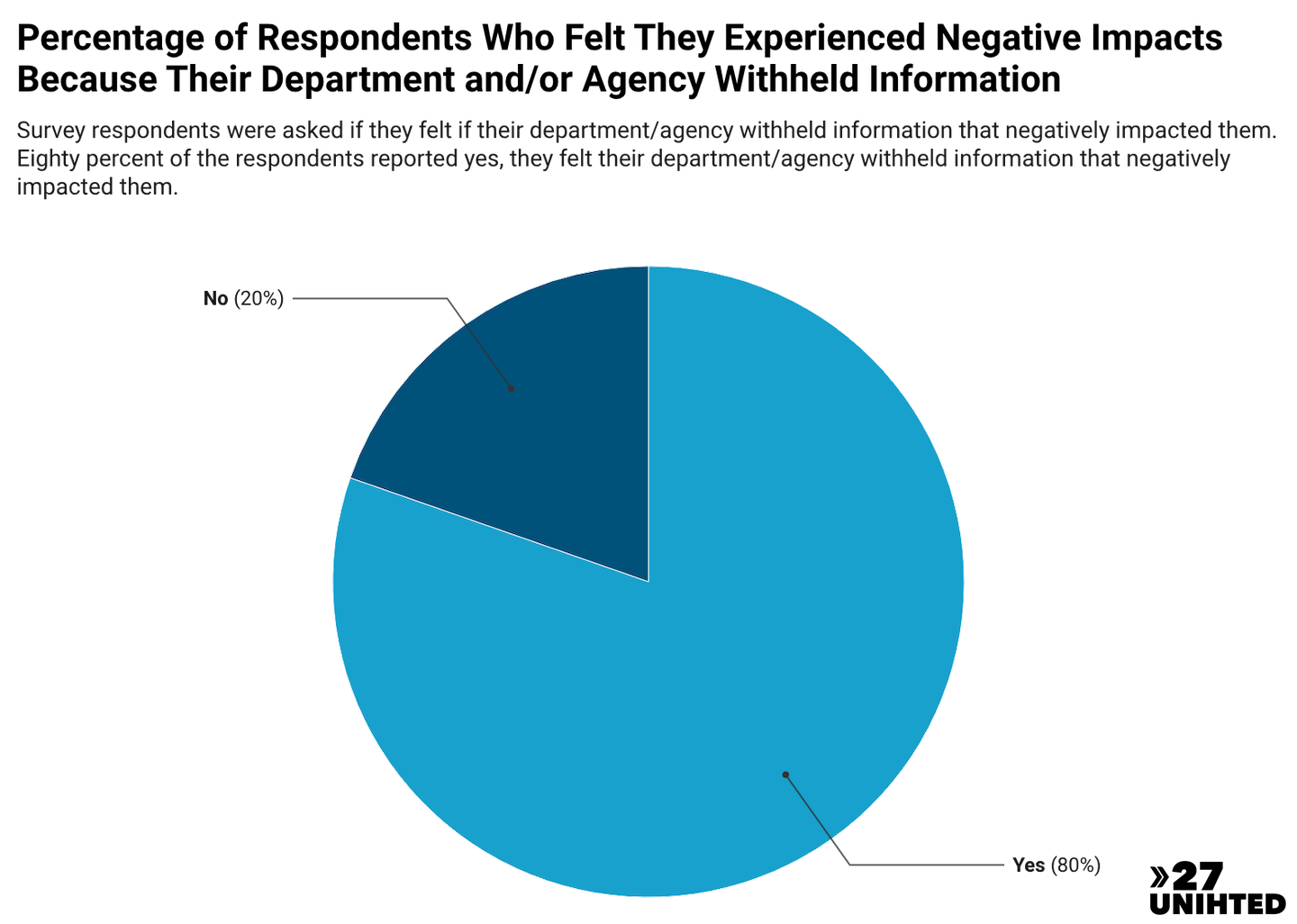
The probationary employees were fired in an unlawful manner. In their short answer responses, many respondents shared that their departments and even their direct supervisors were often uncertain about what was happening. This created gaps in communication and information sharing; there was no precedent for unlawful firings at such a large scale and, thus, there was no apparent strategy for how agencies should proceed.
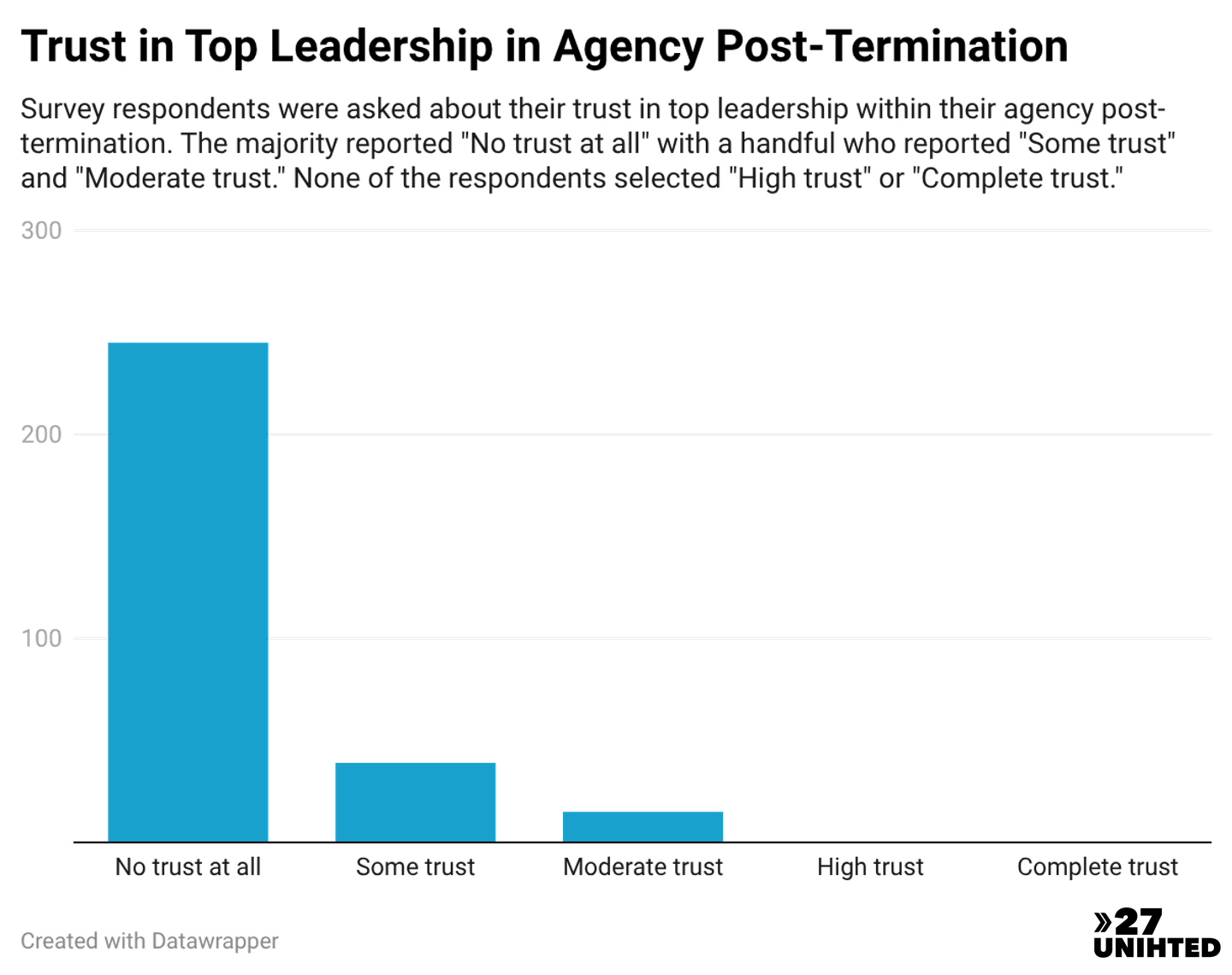
An overwhelming amount of respondents reported they no longer have any trust in the top leadership at their former agency (about 82% of 300 respondents).
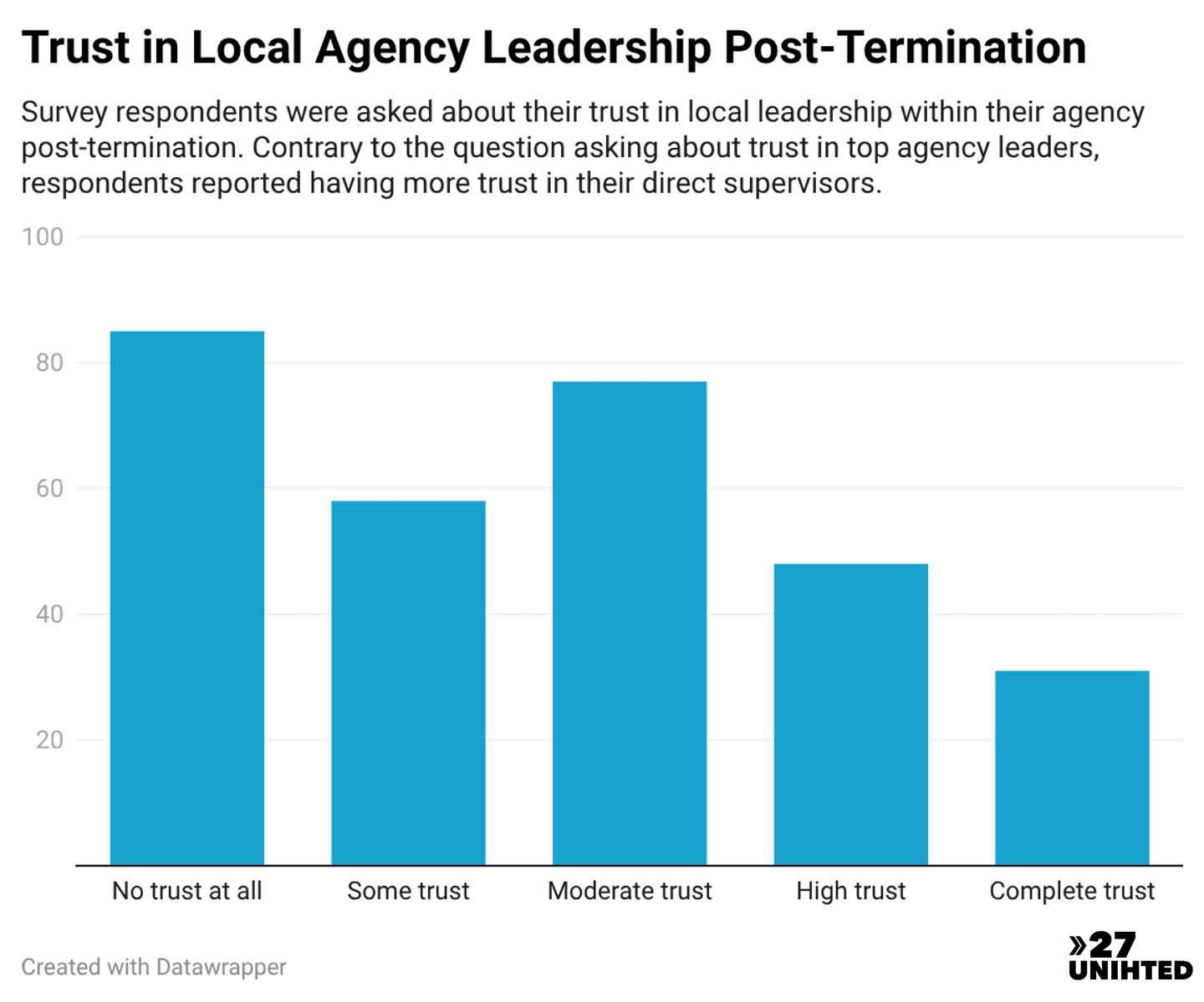
While trust in local leadership fared somewhat better, over a quarter of 299 respondents reported that they lacked trust in their local leadership.
Trust in leadership is essential to a healthy workforce dedicated to their mission. It is also imperative for the American public to be able to trust their government.
Lack of Transparency
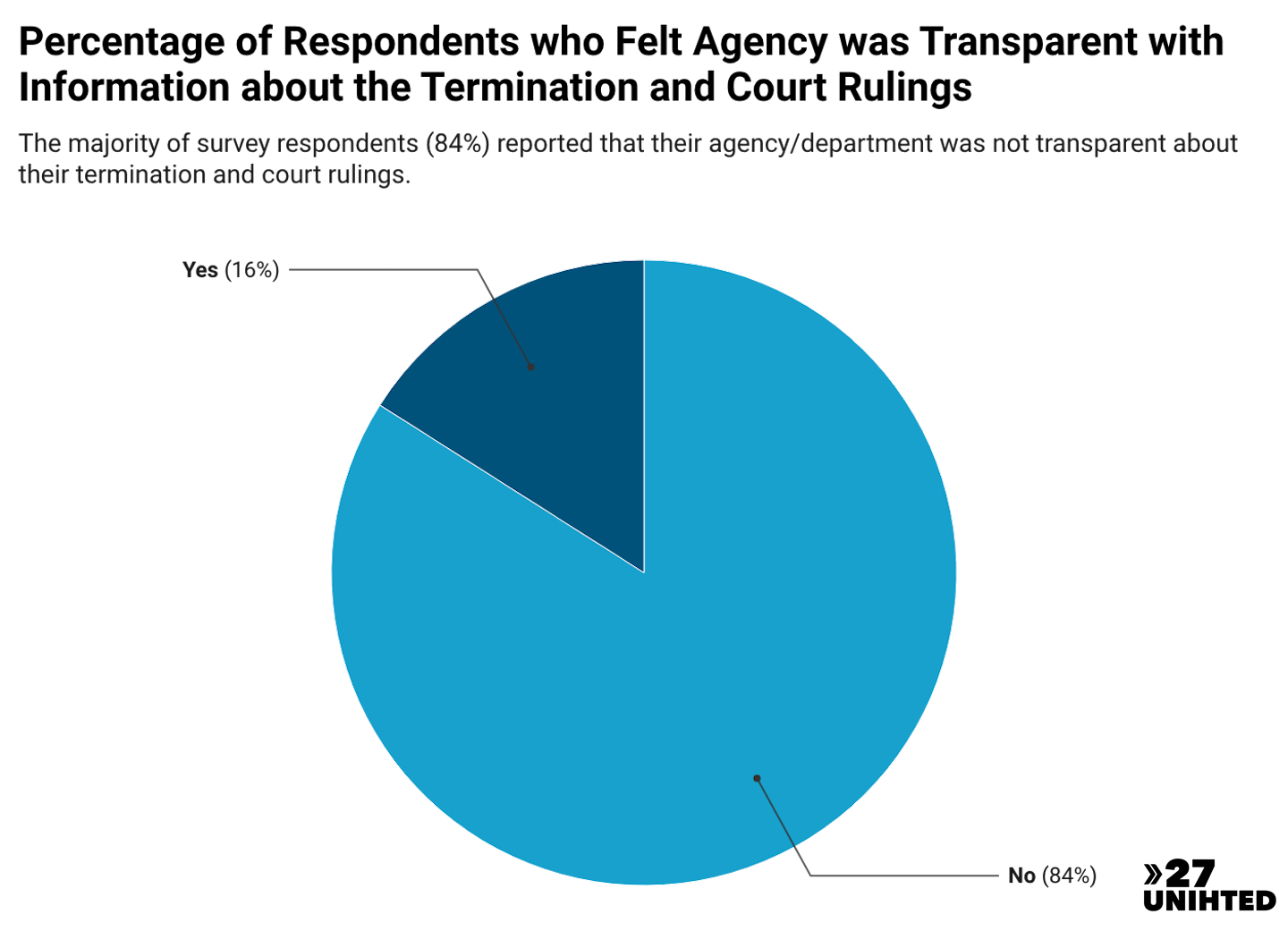
Most respondents felt that both their department or agency and their human resources (HR) department lacked transparency in sharing information. Processes exist to govern types of information sharing and they were not followed.
Agency Reinstatement Actions
Some respondents were reinstated after their initial firing. However, respondents reported that even those reinstated did not receive standardized information and many questions were left unanswered.
Although they were able to return to their jobs, many of them lacked any feelings of job security and were unable to gain answers to questions about their futures as federal employees.
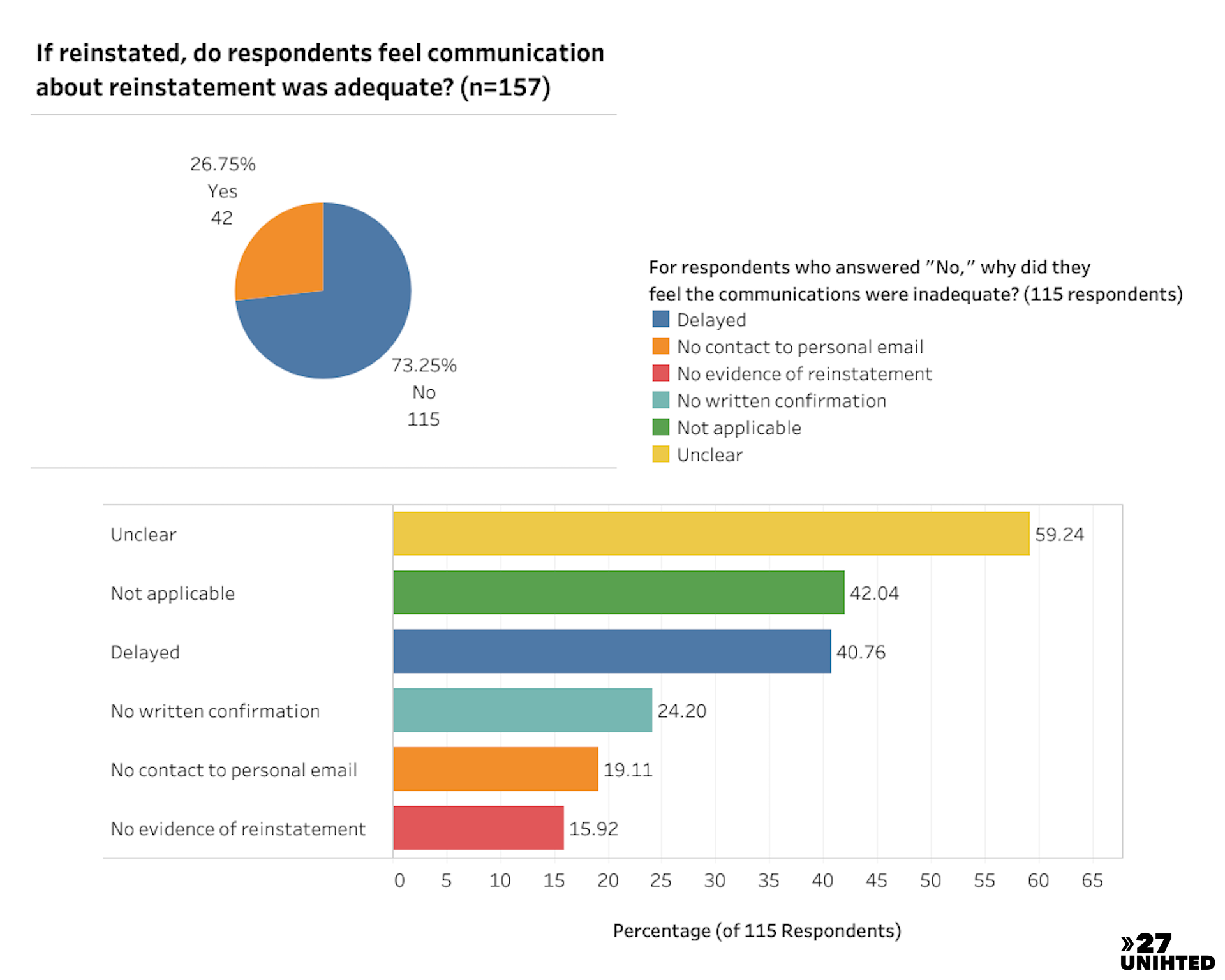
This data shows a lack of consistency and trust across government agencies. Individuals stated they were not receiving clear communication from human resources, leadership in their agencies and/or their local leadership, and the majority of these respondents said they have no trust in top agency leadership. This lack of trust is indicative of damage that may persist beyond a single administration.
Conclusions
*Disclaimer: The survey did not request that respondents provide personal identifying information (PII), and results are published as aggregated responses for each question. Organizers did not verify the identity or status of respondents, and respondents self-selected to participate. No single question required an answer. Thus, the percentages for each question share only the respondents’ answers for that particular question, meaning the totals vary throughout the results. Respondents did not receive an incentive to complete the survey; participation was completely voluntary. This is not a research project.