America’s Seed Funding Programs Reinstated After Five Month Long 27 UNIHTED Campaign
What is “America’s Seed Fund”?
Congress enacted the Small Business Innovation Development Act in 1982 to bring high-risk, high-reward and innovative products to market. The program was designed to enable the development of products that may be too high-risk or have too long a time horizon to attract private investors. Since then, the Small Business Innovation Research (SBIR) and Small Business Technology Transfer Research (STTR) programs have supported innovation through funding provided by multiple agencies across the federal government, including the Department of Defense (DoD), the United States Department of Agriculture (USDA), the Department of Health and Human Services (HHS), and the National Aeronautics and Space Administration, among others. These competitive awards allow entrepreneurs and small business owners the opportunity to develop their ideas into transformative products. At the NIH, the program supports hundreds of small businesses every year. These recipients are developing biologics, drugs, medical devices, consumer products, and other technologies into marketable goods to help improve patients’ lives across the United States.
Proven Impacts
Health Impacts
Between 1996 and 2020, 12% of all new FDA-approved drugs were developed by companies that received SBIR and STTR funding.
65% of SBIR/STTR projects from the NCI have gone on to support cancer patients lacking current treatment options.
Economic Impacts
SBIR has delivered a 22:1 return on investment for DoD and created over 1.5 million jobs nationwide.
Interdisciplinary
More than $4 billion annually flows through SBIR/STTR across 11 federal agencies, fueling innovation in defense, healthcare, energy, and cybersecurity.
NIH SBIR/STTR funding is over $1.4B annually.
What Was the Issue and Why Does it Still Matter?
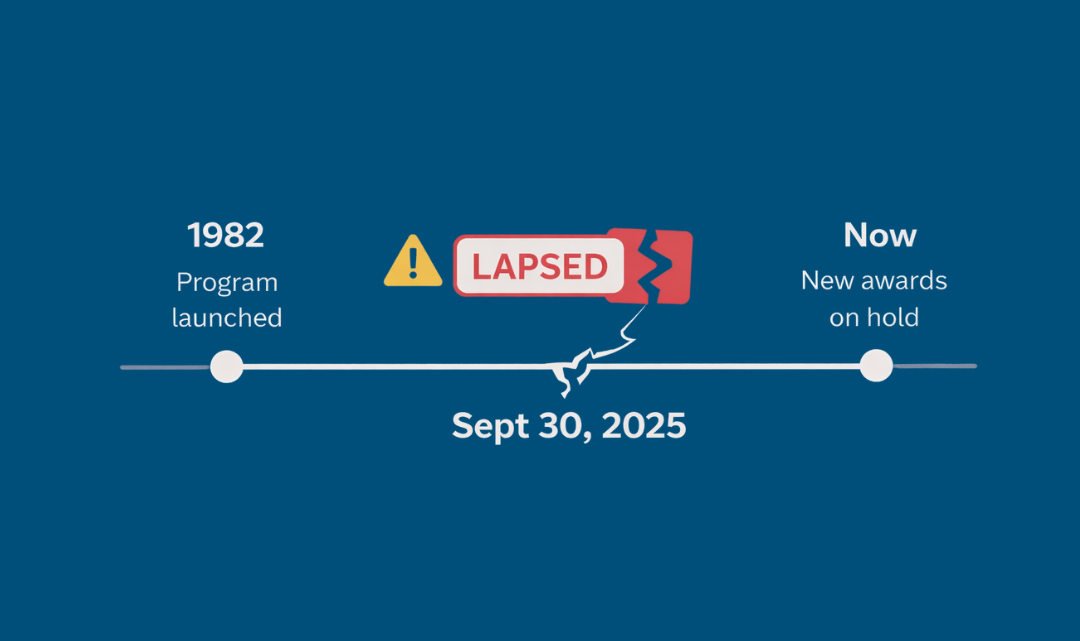
The SBIR/STTR program has been regularly renewed, but in 2025, its authorization was held up in the Senate Small Business and Entrepreneurship committee. The program ultimately lapsed on September 30, 2025. This was the first lapse in operations during the forty year history of the program. The NIH, along with other agencies, was unable to allot funds, issue new awards, or accept applications while the country waited for lawmakers to reauthorize the program.
So 27 UNIHTED stepped up and advocated for the program to be reauthorized.
Over the course of this campaign, our team developed and distributed a congressional information packet, held four meetings connecting Senate staffers from both sides of the aisle to off-duty/former NIH staff and previous grant recipients, shared 25+ social media posts, collected and elevated eight SBIR/STTR success stories, and more. The SBIR/STTR program was finally reinstated on April 13th, 2026.
Unfortunately, there were still lasting impacts from the months-long pause. Companies that were unable to apply for funding were in jeopardy while waiting for this outcome, and innovations were delayed.
What Can You Do?
Although we’re relieved that the SBIR/ STTR program was reauthorized, we encourage researchers to continue to highlight the importance of this impactful program. We want to remind our legislators that the products created through this program help Americans across the country, boost our economic success, and drive future research.
Share Your SBIR Success Story
Are you at a company with lasting impacts due to the extended pause? Are you at a company that has benefitted from SBIR support? Tell us about your innovations and how this program has helped you work toward your goals. Help us highlight the need for this type of program. Fill out this form and we’ll share your story!
Call Your Representatives
Call your senators and let them know that the even though SBIR has been reauthorized it is not without consequence.
SBIR Testimonials