The Bethesda Declaration Movement
On June 9th 2025, hundreds of NIH workers released the Bethesda Declaration, a letter of concern about new policies at the NIH disrupting science and harming the public. The Declaration made national and international news (CNN, AP, India Times, NPR, and more) and prompted a whistleblower protection letter from Congress. It spurred a science advocacy movement among NIH workers and the broader research community when over 32,000 members of the public signed their names to support health research. This started a movement of civil servant dissent across the government. Despite the outcry, many of these harmful, unethical and unlawful policies continue at the NIH, prompting the release of the Bethesda Declaration: One Year Later report on June 9, 2026. Many in 27 UNIHTED leadership organized the initial letter and continue to support civil servants, particularly those at NIH, as they speak up on behalf of the American people.
Bethesda Declaration Timeline
Bethesda Declaration: Supporting Dr. Fauci
On August 6th, ahead of the Senate Homeland Security and Governmental Affairs Committee’s vote on a resolution to hold former NIAID Director Dr. Anthony Fauci in contempt of Congress, the Bethesda Declaration organizers released a public letter to support Dr. Fauci in the face of this political attack.
Bethesda Declaration: One Year Later In the News
-
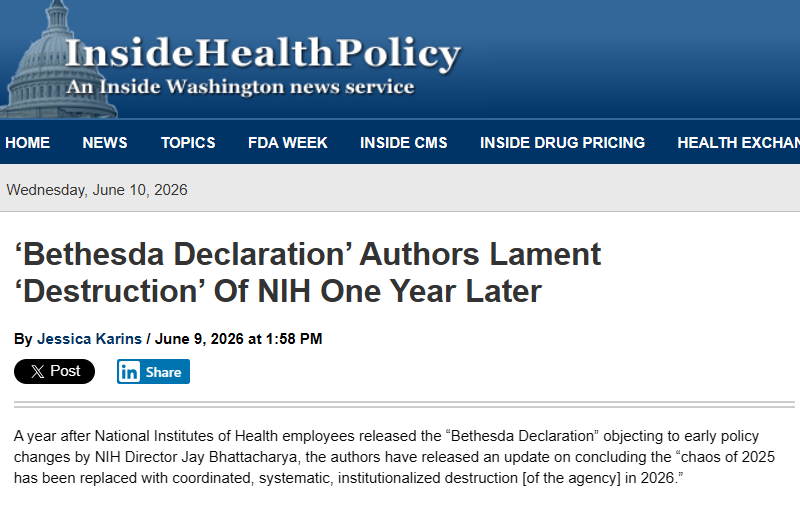
Inside Health Policy: "'Bethesda Declaration' Authors Lament 'Destruction' of NIH One Year Later"
-
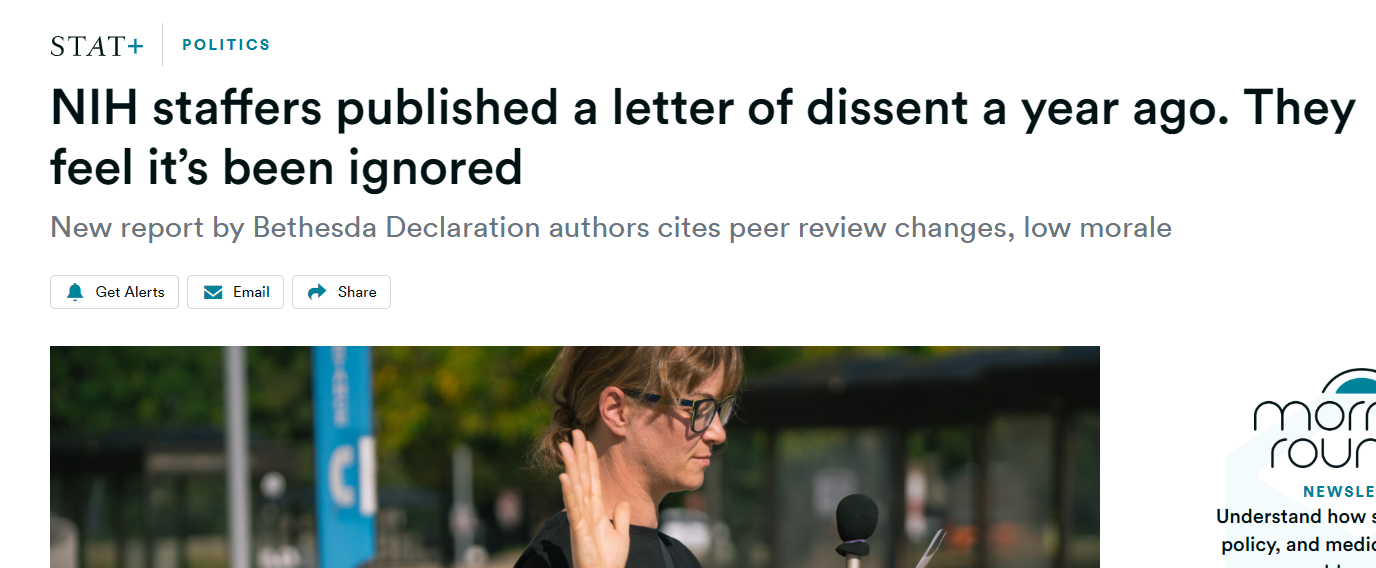
Stat News: "NIH staffers published a letter of dissent a year ago. They feel it’s been ignored"
-
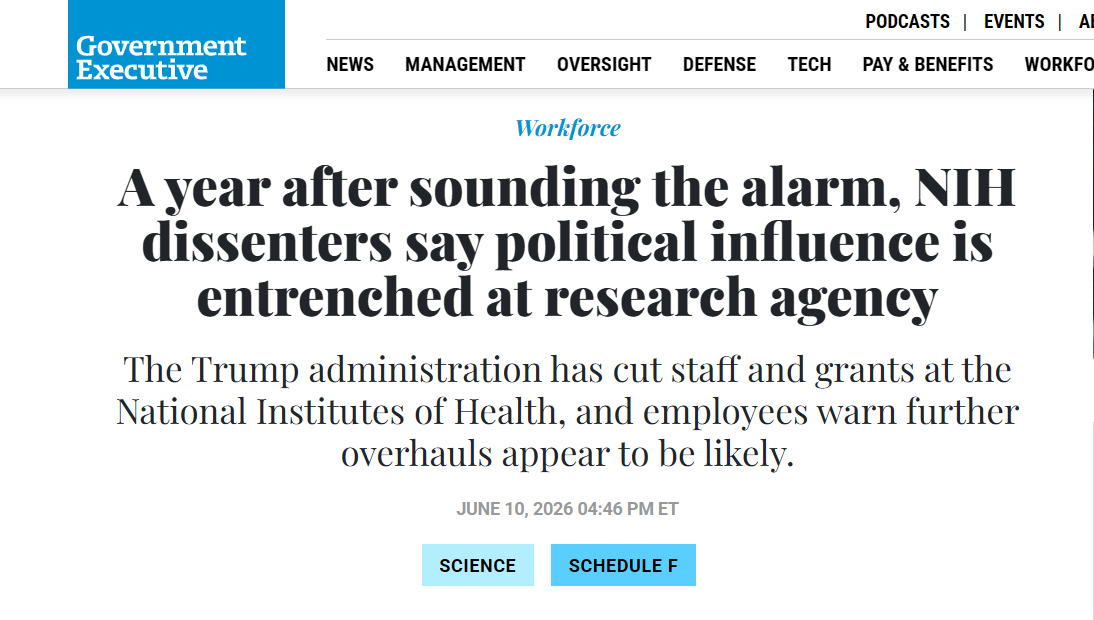
Government Executive: "A year after sounding the alarm, NIH dissenters say political influence is entrenched at research agency"
-
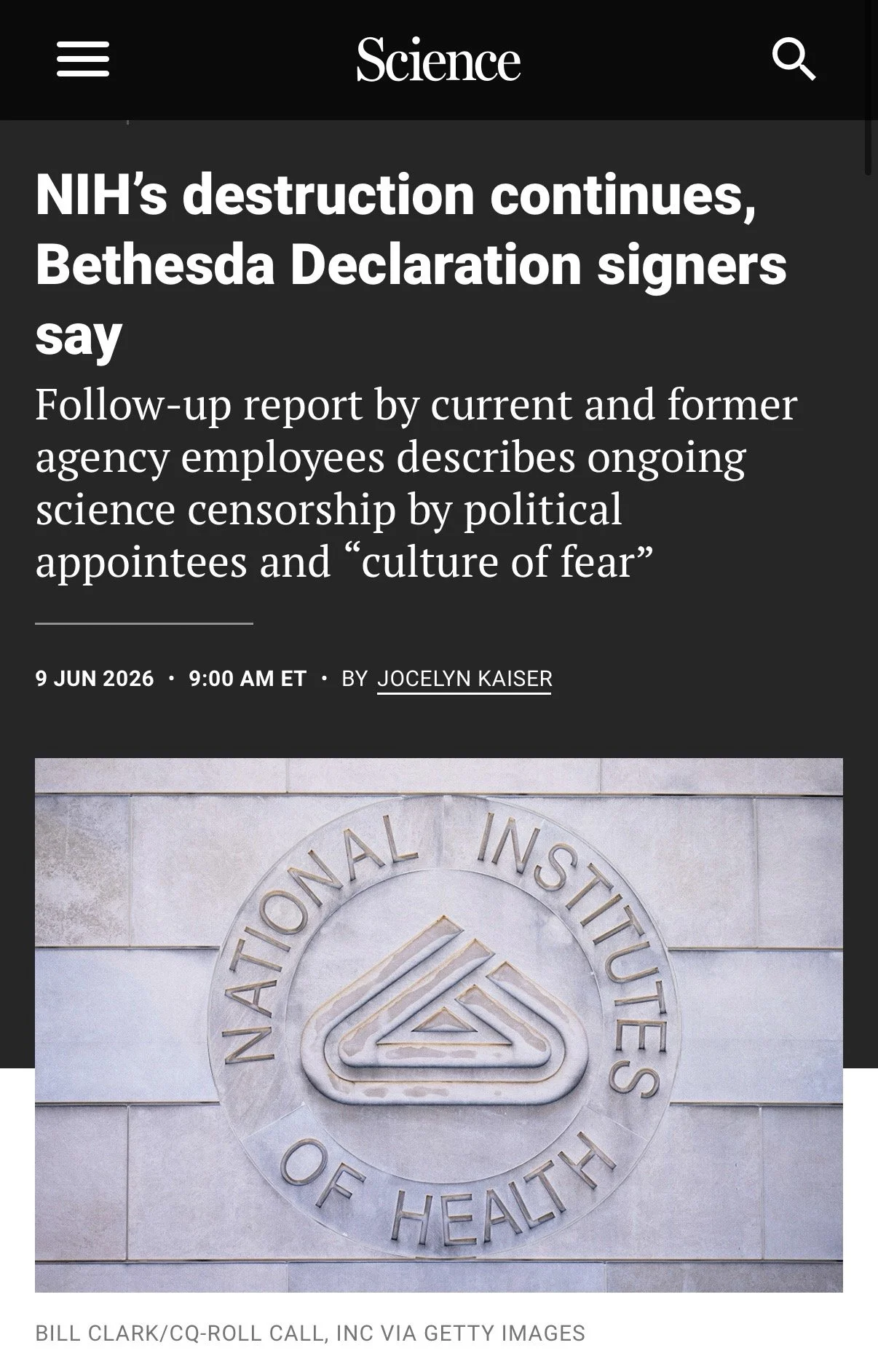
Science: "NIH's destruction continues, Bethesda Declaration signers say"
The Bethesda Declaration: One Year Later
One year after publishing the Bethesda Declaration, Bethesda Declaration organizers authored a 30+ page report on the continuing harm to the NIH, the research community, and the public over the previous year. The concerns outlined by authors include:
Concern 1: An anti-science agenda is disrupting research for health advances and cures
Concern 2: Discriminatory policies are worsening disparities
Concern 3: Ignoring ethical standards has put research participants and the public at risk
Concern 4: An unstable research environment is undermining scientific advances and public trust
Concern 5: Lost critical expertise is hindering the NIH mission
Concern 6: Changing policies without staff input is creating foreseeable damage
Concern 7: Cumbersome and shifting processes are wasting resources and harming health
Concern 8: Disruption of global research is endangering people in the United States and around the world
Concern 9: A culture of fear and low morale is eroding scientific integrity
Despite a culture of fear and low morale, 73 individuals, both anonymously and by name, contributed to this effort.
Endorsing Organizations


Civil Servant Declarations
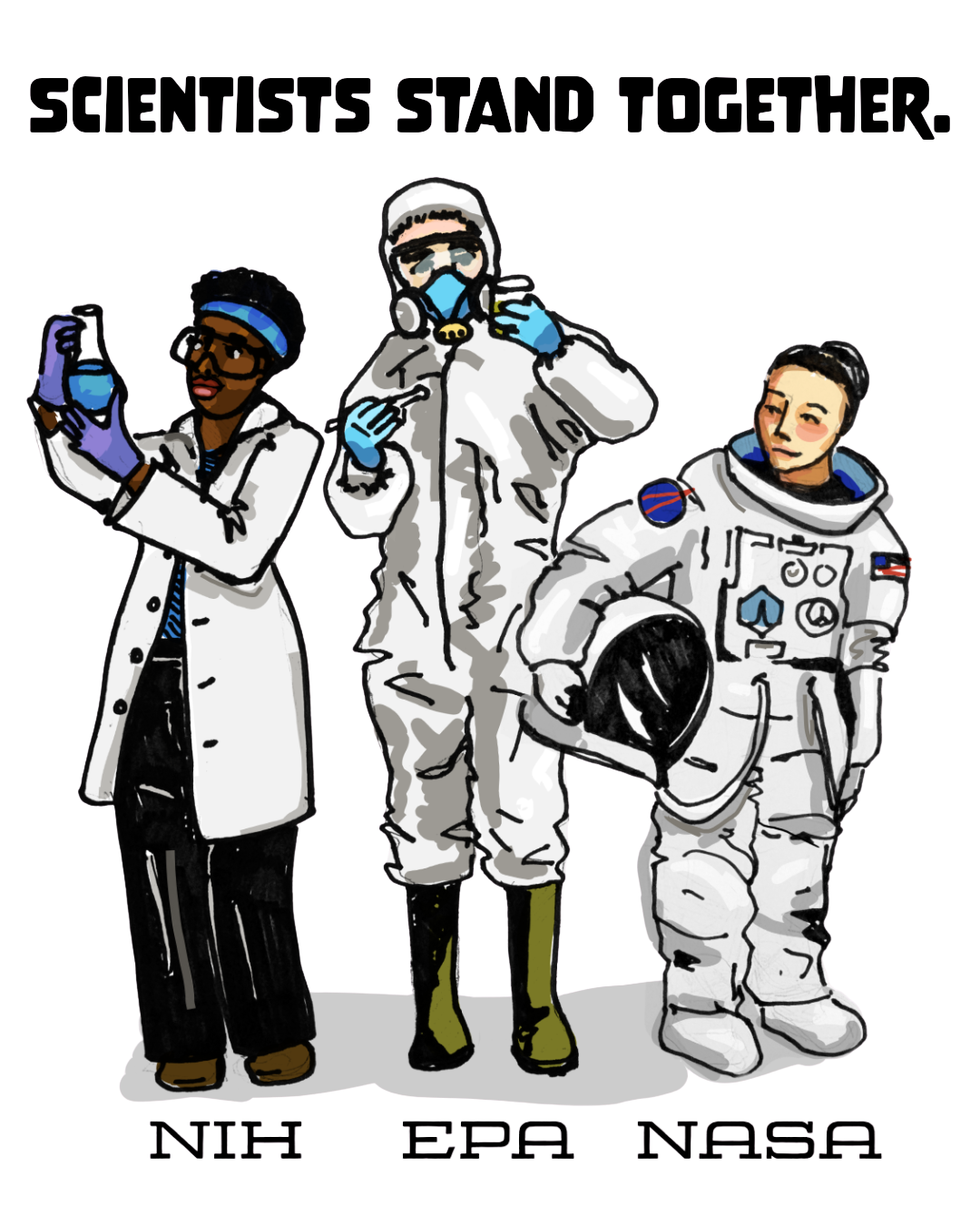
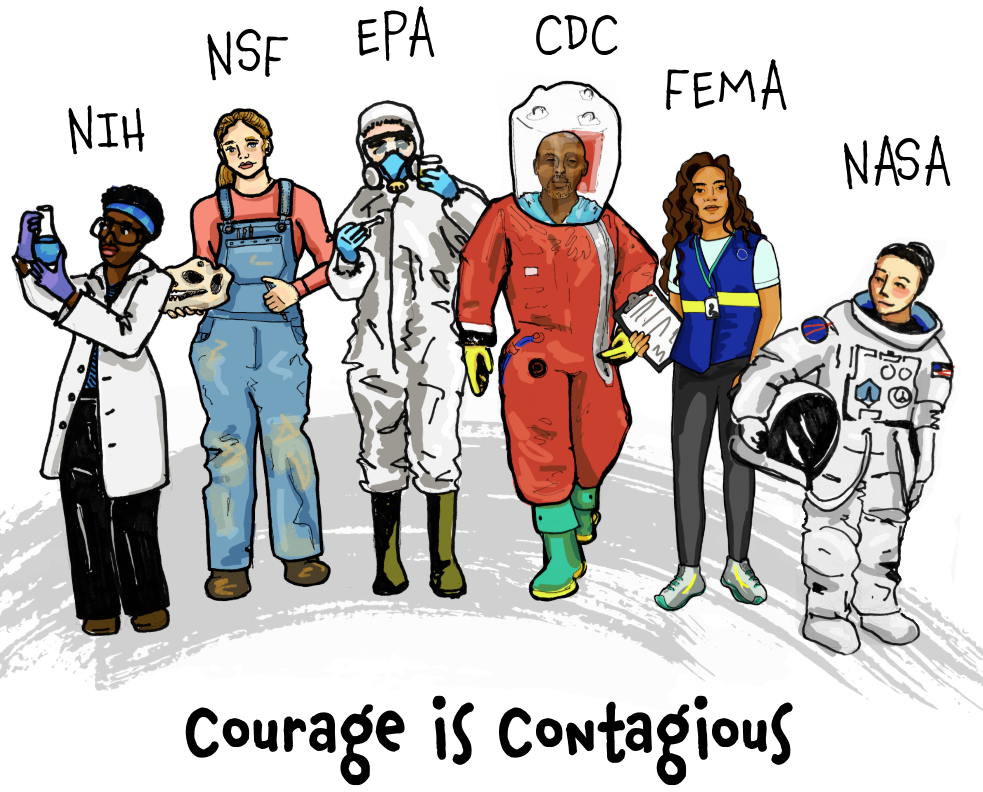
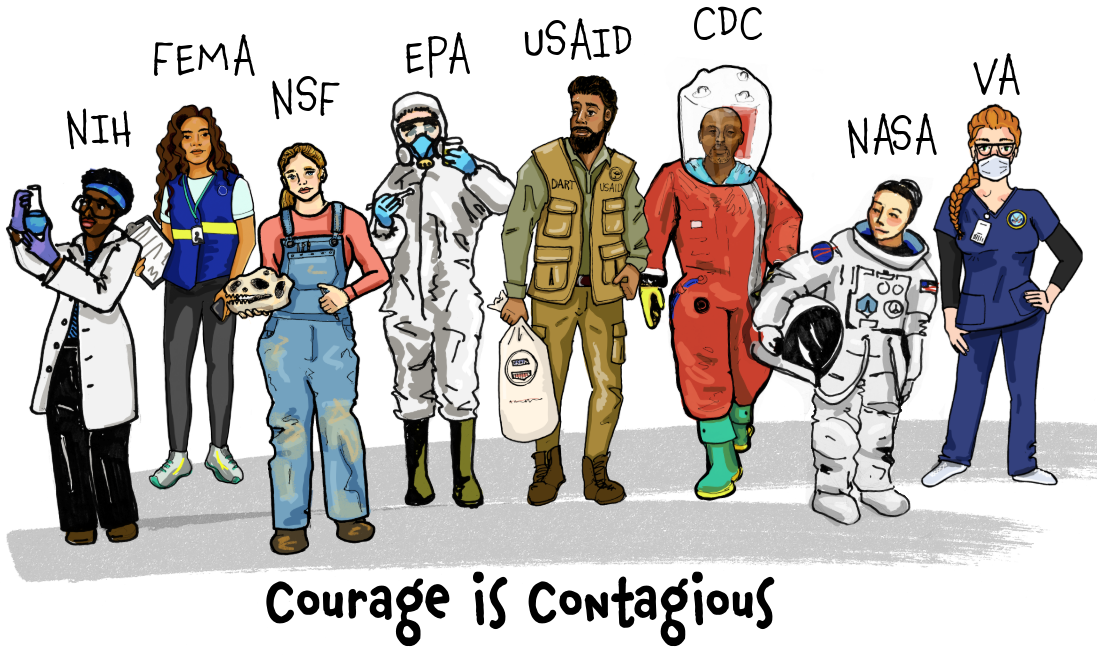
The Bethesda Declaration contributed to a movement of staff from across the government who spoke up to protect the missions of their agencies. Letter writers collaborated on ideas as they organized, working in a cross-agency coalition. As they wrote, a talented NIH staff community member drew illustrations of the writers, with the growing picture representing the growing movement.
The Original Bethesda Declaration
The Bethesda Declaration was a letter composed by current and former NIH workers, emailed to Dr. Jay Bhattacharya, the NIH Director. This letter outlined five main concerns: politicization of research, interruption of global collaboration, undermining of peer review, the enactment of a 15% indirect cap, and the firing of NIH staff. This letter orgiginally hosted on Stand Up For Science’s website, is now also hosted here along with other material as the movement grows.